Table of Contents

Why AI Shopping and In-Chat Checkout Will Redefine Retail

- In-chat checkout integrations from platforms such as PayPal, Perplexity, Target, Shopify, and ChatGPT are collapsing product discovery and purchase into a single conversational interface.
- LLM-based product discovery relies on contextual evaluation of product attributes, making high-quality, structured product data and content critical for brand visibility.
- As transactions move into AI platforms, ownership of first-party customer data and direct post-purchase relationships becomes a strategic requirement for brands.
This holiday season marked a real turning point. Shoppers didn’t just browse on AI platforms; they bought. They compared. They checked out. And they often did it without ever visiting a retailer’s website.
As AI-powered discovery moves further into the mainstream, the commerce funnel is collapsing into a single conversational interface.
For modern brands, this shift isn’t simply about adopting new technology. Brands that will sustain long-term growth need to prepare for a future in which owning your product data, content quality, and customer relationships is second nature.
What’s Happening Now: AI Took Over the 2025 Holiday Season
AI had a massive presence during Cyber Week 2025. Analysts estimate that conversational agents influenced 20% of all global online orders, contributing to nearly $67 billion in sales.
Mobile kept its position as the dominant channel for buying. Salesforce reported that more than 70% of online orders during Cyber Week were placed on mobile devices, a sign that consumers are fully comfortable completing fast, informed purchases from anywhere.
And, with AI traffic to U.S. retail sites up 670% on Cyber Monday (and 760% for the season so far), it’s clear that shoppers are relying on AI as a core part of their browsing and buying experience
AI is no longer augmenting the shopping journey. It is the shopping journey.
The Breakthrough: In-Chat Checkout Turns Discovery Into Conversion
A major acceleration point came with the rollout of in-chat checkout. When PayPal and Perplexity launched Instant Buy, users could ask for recommendations, review options, compare prices, and check out directly inside the chat experience. No redirects. No extra tabs. No friction.
Target announced a similar move, integrating its full catalog into ChatGPT so shoppers can search, add to cart, and check out using their Target account. Large retailers see the writing on the wall. The next wave of ecommerce is happening inside conversational platforms, not adjacent to them.
And Shopify is already moving in this direction as well. Earlier this year, Shopify and OpenAI partnered to bring commerce directly into ChatGPT, allowing users to browse and buy from Shopify merchants within the conversational interface — a signal that in-chat shopping is becoming a foundational part of the ecommerce ecosystem.
This flips the traditional funnel. The moment of discovery becomes the point of sale. Brands that are ready with rich, structured product data, clear positioning, and optimized content will surface more frequently in these AI-driven contexts.
Why This Matters for Brands
The new advantage belongs to brands with strong product data and direct customer relationships.
AI Discovery Is Contextual
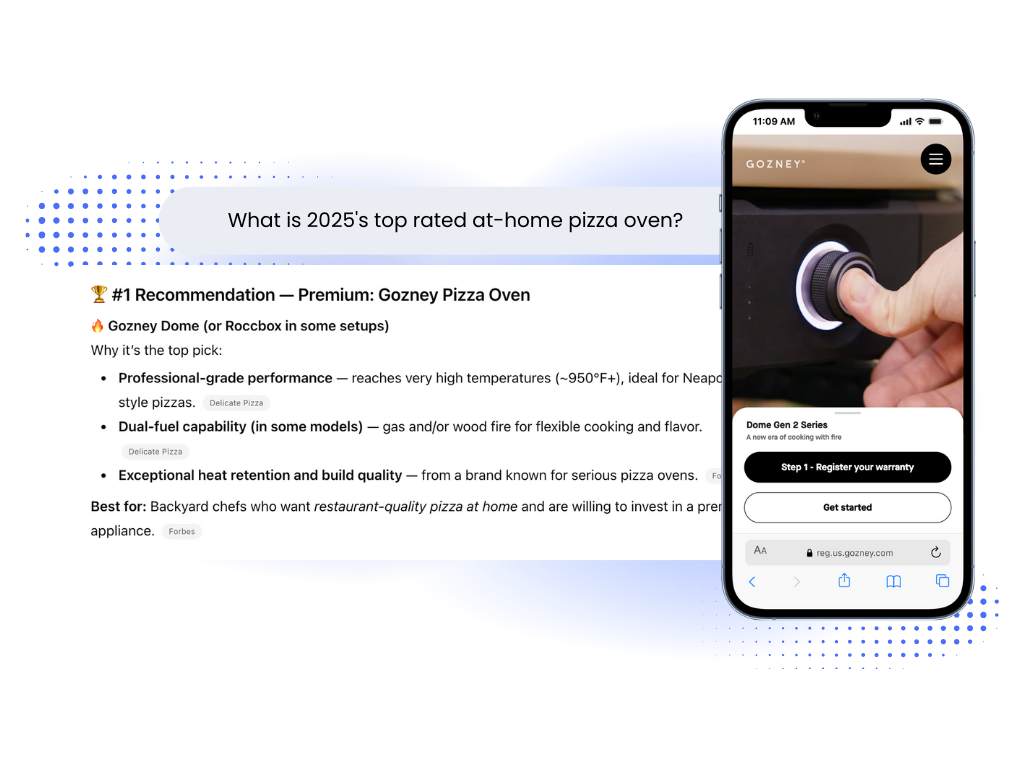
Consumers are now using LLMs for product discovery, and the shift is profound. Instead of typing short keywords into a search bar, they describe needs, constraints, preferences, and intentions. AI platforms respond by evaluating product attributes in context.
Brands that invest in high-quality descriptions, attributes, content, and education will win.
Smaller Brands Can Finally Break Through Algorithmic Bias
Traditional marketplace algorithms often favor incumbents with high sales velocity. Conversational AI behaves differently. It optimizes for user satisfaction, not historical transaction data. That opens the door for niche or emerging brands with differentiated value.
Owning Customer Data Is Now a Strategic Imperative
As more transactions occur inside AI environments, brands risk losing visibility into how their customers shop and why they buy. The brands that succeed will be the ones that build strong content foundations, create direct value exchanges with customers, and maintain relationships that outlast any single channel.
This is where structured catalog data, serialized product identities, and intelligent post-purchase workflows become essential. Even as the front end shifts to AI, brands still need a dependable way to know who their customers are and how to nurture them.
Conversion Will Rise as Friction Falls
The more streamlined the path to purchase, the higher the conversion rate. In a conversational experience, shoppers skip the traditional decision fatigue of browsing pages, comparing specs manually, or re-entering payment info. AI reduces the mental load of shopping and helps consumers make confident decisions quickly.
AI Search Surpasses Traditional Search
According to Semrush projections, AI search traffic will surpass traditional organic search by 2028.
At first glance, that may seem alarming. Search has been the backbone of online discovery for decades. But the data shows something different. A website visitor coming from ChatGPT is 4.4× more likely to convert than one coming from Google.
That means AI platforms are not just replacing search volume, they are improving purchase intent.
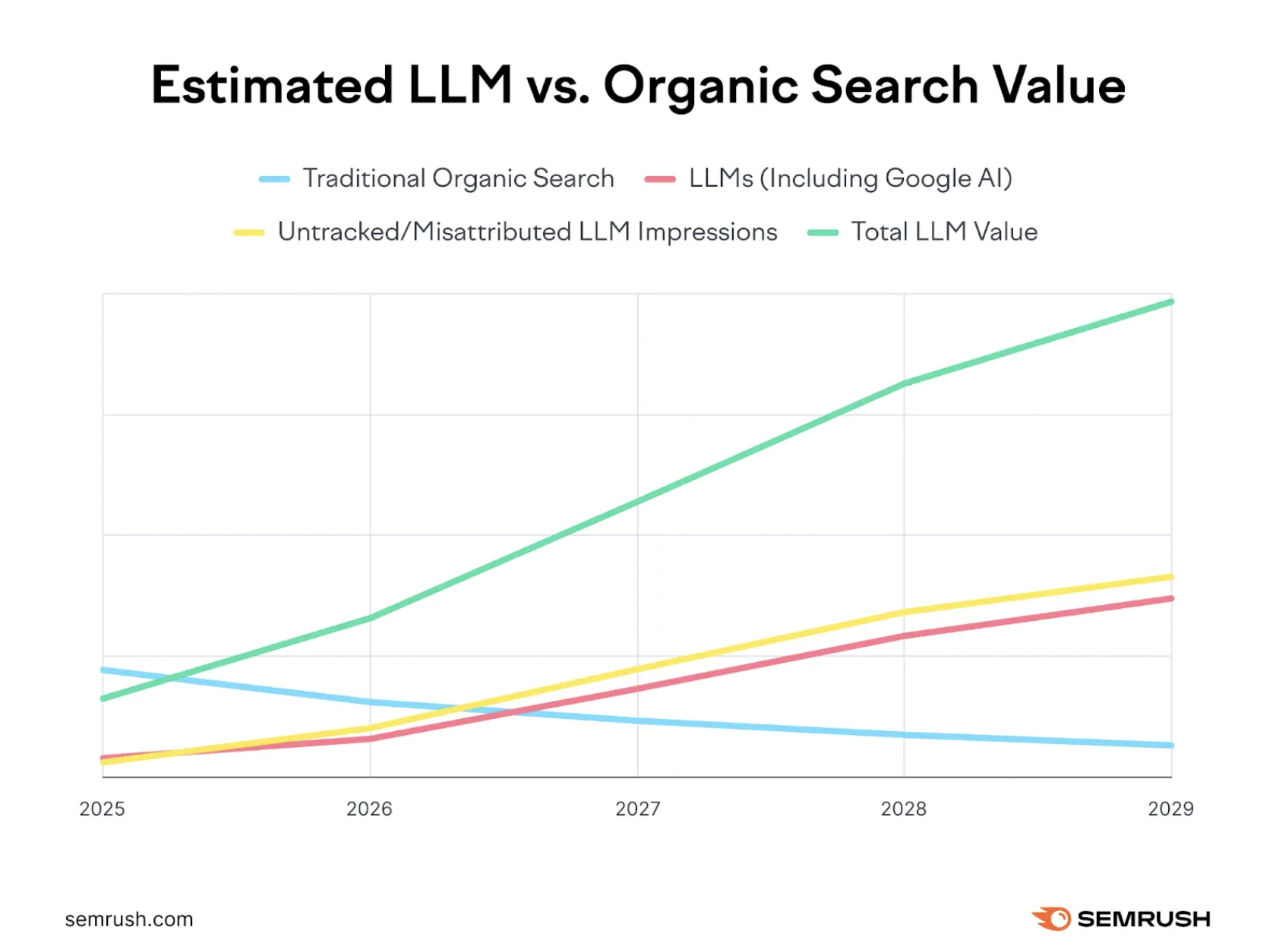
For brands, this underscores a critical shift. Instead of optimizing primarily for SEO as we know it, the next phase will require optimization for clarity, structure, and context. Product data needs to be understandable not only to humans but to LLMs that evaluate relevance across thousands of signals.
How Brands Should Prepare: A Practical Roadmap
Recommendations for AI Preparedness
- Strengthen product data and metadata: Rich attributes, consistent formatting, and context-rich descriptions ensure your products show up in AI conversations.
- Invest in brand storytelling across channels: Even in an AI-mediated world, strong narratives help differentiate in categories where products otherwise blur together. Include storytelling post-purchase to educate customers and create lasting relationships.
- Create systems for capturing first-party customer data: The shift to AI shopping means brands will increasingly lose access to customer information they once relied on. Systems that capture first-party data at the product level and prompt customers to engage post-purchase allow brands to rebuild visibility regardless of where the initial purchase occurs. This becomes essential for future personalization, replenishment, and loyalty.
- Prepare for inspiration-driven shopping: As AI becomes the place where shoppers gather ideas (“What gift should I buy for my sister who loves Pilates and travel?”), brands should think about how bundles, use cases, and complementary products surface in these contexts.
- Remove friction wherever possible: A fast, intuitive checkout experience is becoming table stakes. If shoppers can buy inside AI platforms in seconds, every other touchpoint must feel equally seamless. Reduce friction for every point post-sale as well – warranty, reorders, product education, etc.
Brij is the Future of AI Commerce
This shift toward AI-driven shopping reinforces something we’ve long believed. Brands win when they own their product data, control the quality of their content, and build direct relationships with customers.
Brij’s omnichannel marketing platform was designed to make that possible.
As commerce moves into AI-driven environments, one of the biggest challenges brands face is the loss of visibility. When products are bought inside ChatGPT, Perplexity, or other conversational platforms, the brand often has no idea who purchased, why they purchased, or where the journey began. The transaction happens in someone else’s interface, through someone else’s data layer.
That makes it even more important to create durable, direct touchpoints with customers beyond the initial point of sale.
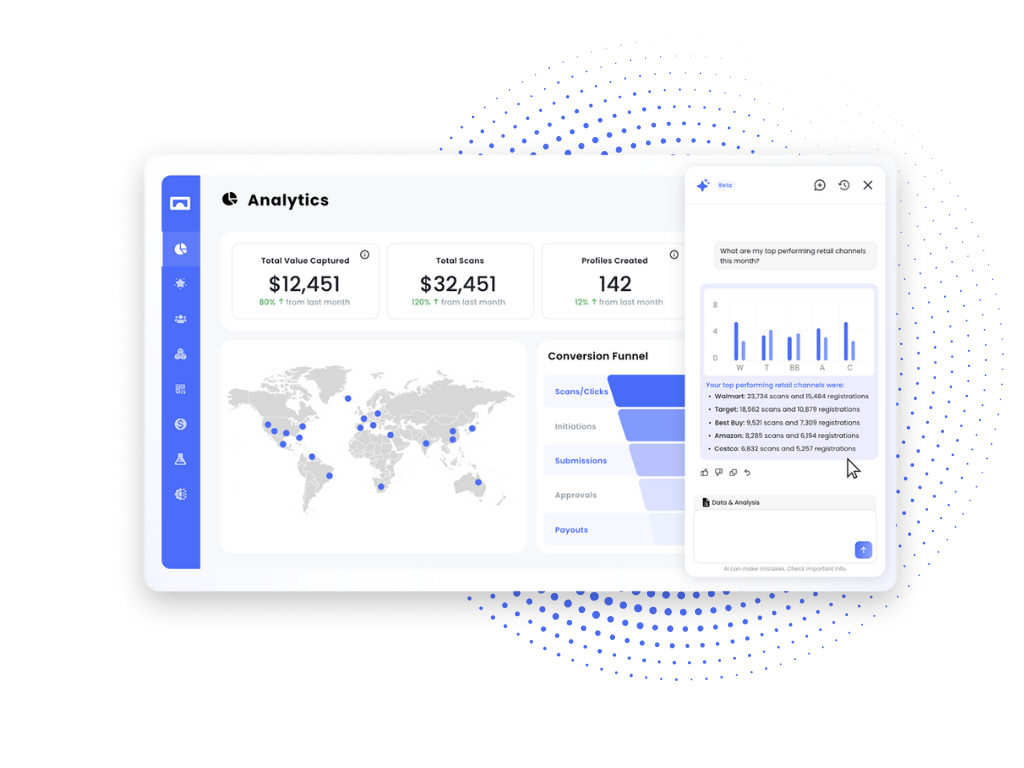
Brij gives brands a structured, consistent way to re-establish customer connection, no matter where the purchase originates.
Whether a product is bought in a store, discovered through an AI agent, or completed through in-chat checkout, Brij-powered experiences help brands:
- Identify who is buying their products, even when the purchase happens on third-party platforms
- Understand where customers are discovering products, including emerging AI surfaces
- Capture first-party data that strengthens retention and personalization
- Deliver frictionless post-purchase engagement, turning anonymous buyers into known customers
In an AI-mediated world where discovery and checkout are increasingly abstracted away from the brand, owning the relationship after the purchase becomes a competitive advantage.
Brij helps brands build that foundation so they stay connected to their customers, regardless of how commerce interfaces evolve.